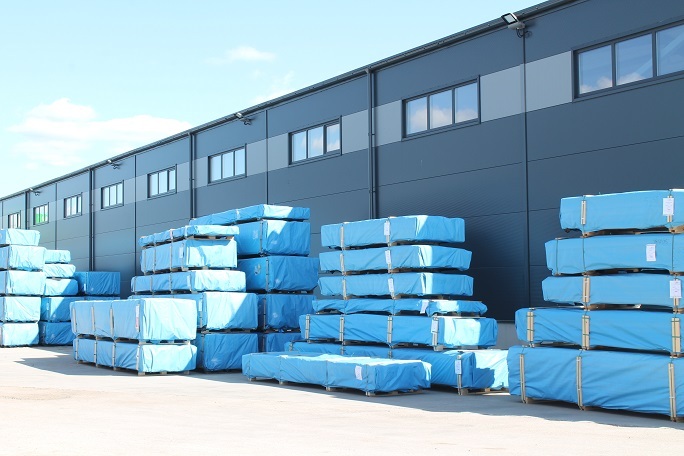
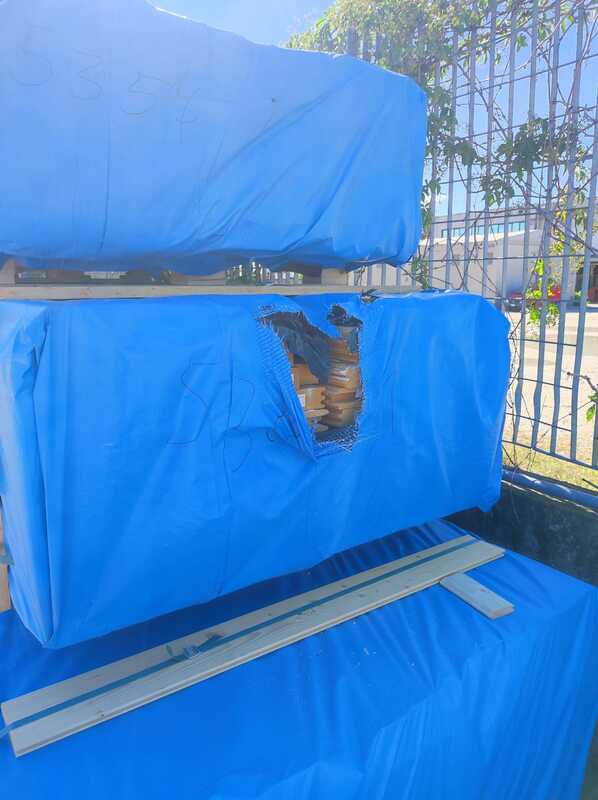
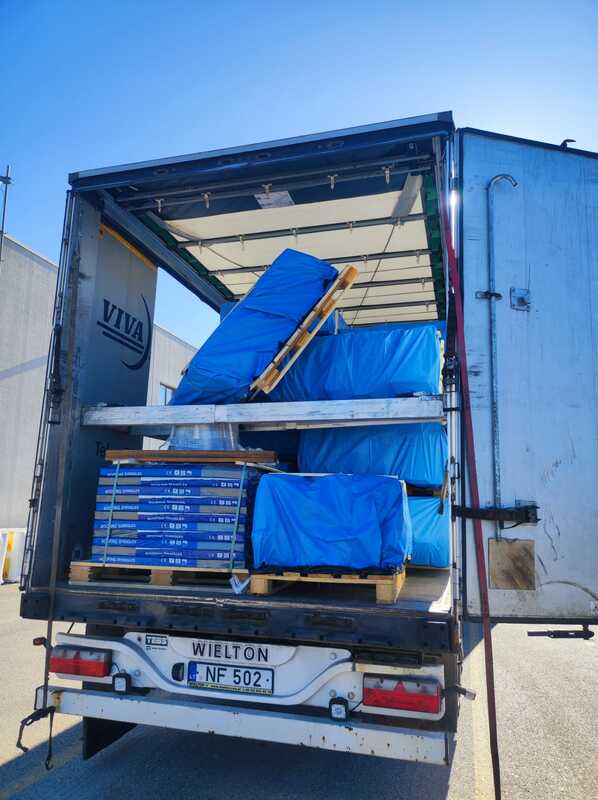
Each package has an identification label containing: The package identification must remain visible and readable during loading, transportation and delivery. The recipient should use these labels together with the project Specification Sheet to identify and verify the delivered packages. The pallets are wrapped with a special breathable protective film. The film allows excess moisture to escape from the package while protecting the products against dust, dirt and normal environmental exposure during transportation. The packaging is intended for transportation and short-term handling. It must not be considered suitable for long-term outdoor storage or continuous exposure to rain, snow, standing water or direct ground moisture. The recipient must inspect the shipment before or during unloading and before signing the CMR. The inspection must include: A damaged pallet or package must not be treated only as a packaging defect. The recipient must assess whether the condition could have affected the products inside, and damaged pallets must be stored under a roof. If any package is missing, damaged, wet, unstable or visibly deformed, the recipient must: Example of an appropriate CMR reservation: Package No. 4 received with a broken pallet base, torn protective film and visible impact damage to the lower right corner. Product condition inside not yet verified. For missing packages, the reservation must state the expected and received quantities: According to the Specification Sheet and CMR, 8 packages were expected. Only 7 packages were received. Package No. 5 is missing. Signing the CMR without recording visible shortages or damage may make it difficult to determine when and where the damage occurred. Packages must be opened carefully without damaging the products with knives, forklifts or other tools. If concealed damage is discovered during unpacking, the recipient must: Missing individual components must first be checked against the project packing list or instructions, packing information and part identification labels. Any damaged components discovered inside the package, as well as any missing individual components, must be reported in accordance with the Janolex Claim Process (SOP). Janolex transport packaging is intended for transportation and short-term storage only. Whenever possible, packages should be stored under a covered, open-sided or well-ventilated shelter. The shelter must protect the packages from rain, snow, direct sunlight and ground moisture while allowing sufficient air circulation. Until assembly, all packages must be: Do not place other packages or materials on top of packages marked with a “Do not stack” label. Do not seal packages with an airtight tarpaulin. Any additional cover must protect against rain while allowing ventilation. If a package becomes wet, inspect it immediately and open or ventilate the wrapping to allow the moisture to escape. Windows, doors, painted components, insulation, glazing and metal roofing must always be kept dry and protected from mechanical damage. Damage caused by incorrect handling, direct weather exposure, ground contact or unsuitable storage conditions is not considered a manufacturing defect. After production is completed, we will store the house or other ordered products free of charge for up to 30 days while transportation is being arranged. If the house is not collected within this period without a justified reason, a storage fee of 0.02% of the total house value per calendar day will apply. If the customer has paid the full value of the house, we are happy to provide one additional month of free storage. The customer remains responsible for arranging collection and providing all information required for transportation within the agreed period1. How Janolex prepares packages for delivery
2. Delivery inspection
3. CMR damage or missing packages reporting
4. Inspection during unpacking
5. Storage conditions after delivery
6. Storage policy at Janolex